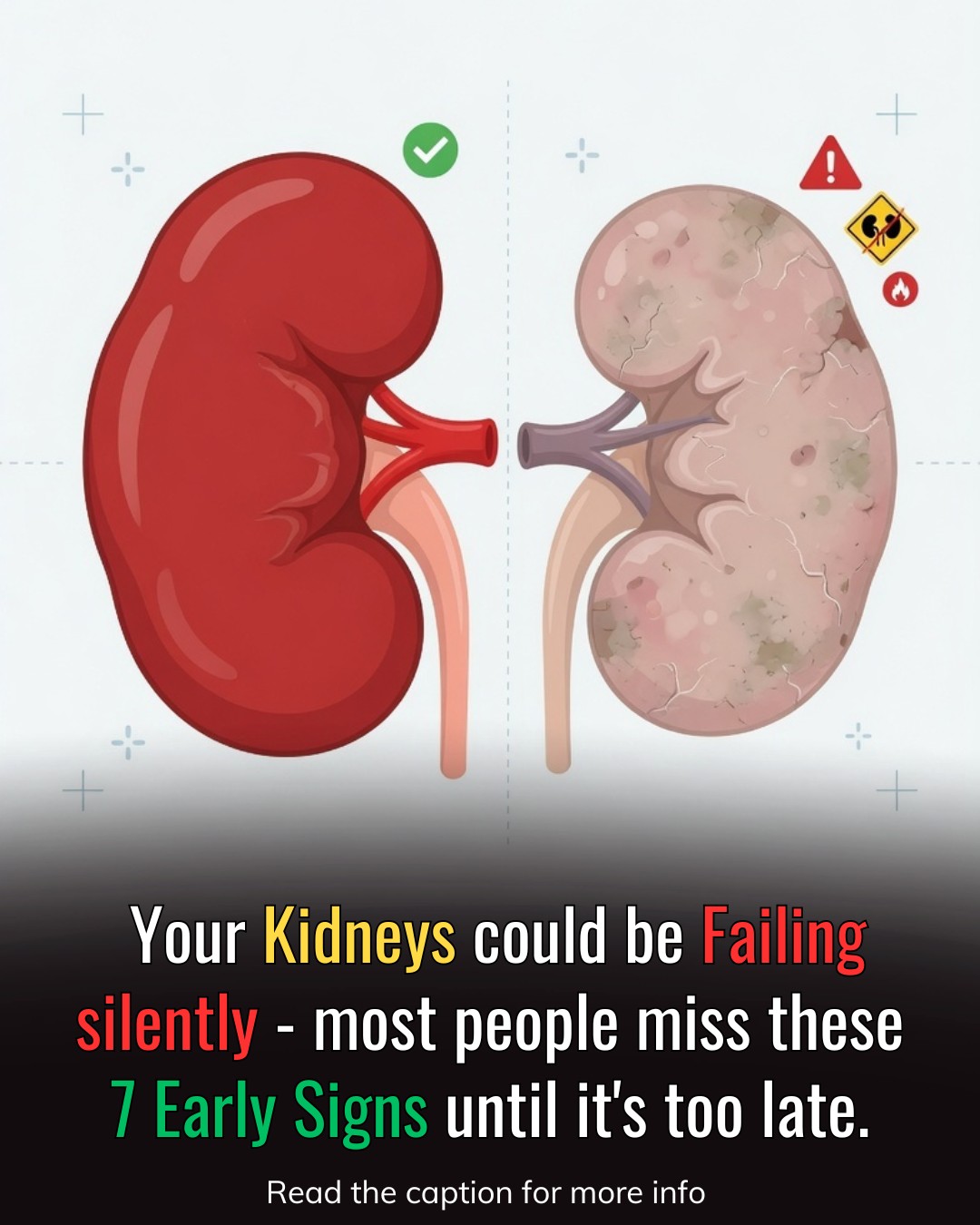
KIDNEY DISEASE IS CALLED THE "SILENT KILLER" – AND HERE IS WHY ⚠️
Your kidneys are two small organs, each about the size of a fist, but they perform some of the most important jobs in your body every single day. They filter waste, balance fluids, control blood pressure, and help produce red blood cells. In fact, your kidneys filter around 200 liters of blood daily to keep your body clean and functioning properly. 🩺
But here is the scary part: when kidney problems begin, most people feel completely normal. There is often no pain, no clear warning, and no obvious symptoms in the early stages. That is why Chronic Kidney Disease is often called the “silent killer.” Many people only discover the problem when 60–70% of kidney function is already lost, making treatment more difficult.
The good news is that your body usually sends small signals before serious damage happens. Recognizing these early warning signs can make a huge difference. Early detection can slow the disease, protect kidney function, and sometimes even prevent further damage.
Here are 7 early warning signs you should NEVER ignore:
1️⃣ Swelling in the feet, ankles, or face
When kidneys are not working properly, they cannot remove excess fluid from the body. This fluid builds up and causes swelling, especially in the lower legs, ankles, feet, or even around the eyes. If swelling appears suddenly or keeps returning, it is important to get it checked.
2️⃣ Feeling tired all the time
Healthy kidneys help produce a hormone that tells your body to make red blood cells. When kidneys are damaged, fewer red blood cells are produced, which can lead to anemia. This means less oxygen reaches your muscles and brain, leaving you feeling weak, tired, and low on energy even after resting. 😴
3️⃣ Foamy or bubbly urine
This is one of the earliest and most noticeable warning signs. Foam in the urine can indicate that protein is leaking into the urine, which normally should not happen. Persistent foamy urine should always be discussed with a healthcare professional.
4️⃣ Urinating more often at night