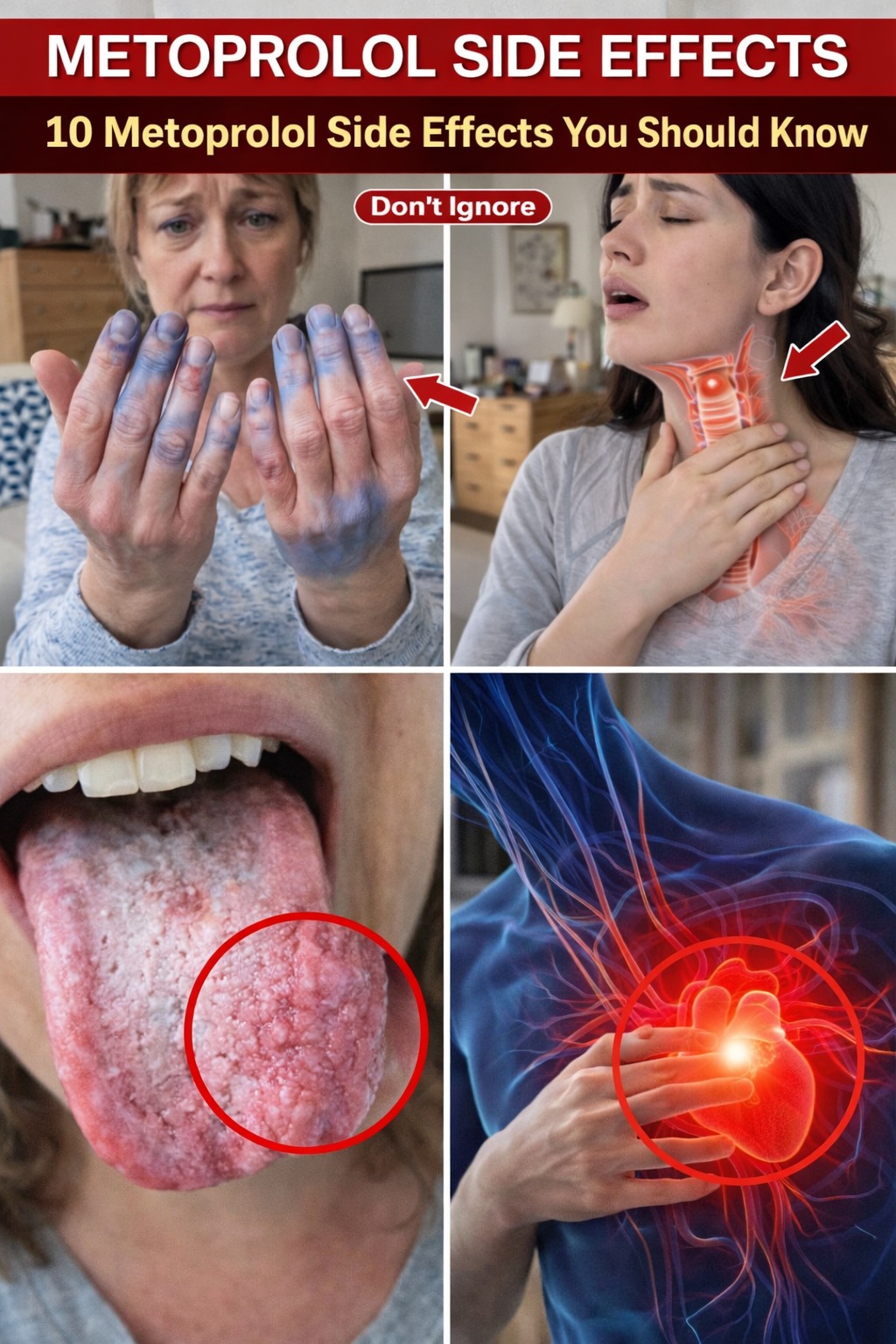
Feeling like you can’t get a full breath, even when sitting or lying down.
Why it happens: Reduced cardiac output + bronchoconstriction (beta-blockers can worsen asthma/COPD).
How common: Especially problematic in people with mild lung issues or heart failure.
Masks hypoglycemia symptoms (tremors, sweating) and can raise blood sugar by reducing insulin sensitivity.
Why it happens: Beta-2 blockade impairs glucose metabolism.
How common: Significant issue in diabetic patients — many need medication adjustments.
Slower metabolism + reduced exercise tolerance + fluid retention.
Why it happens: Lower energy expenditure + sympathetic suppression.
How common: 5–10 kg gain over 1–2 years is a frequent complaint.
Hides warning signs of hypoglycemia (shakiness, rapid heartbeat) and can make hyperthyroidism harder to detect (slows heart rate).
Why it happens: Blocks adrenaline response.
Bottom Line – What Most Doctors Won’t Tell You Upfront
Metoprolol is very effective for blood pressure and heart protection — but it comes with a high price in quality of life for many patients. The side effects listed above are not rare; they are among the most common reasons people quietly stop the drug or switch to alternatives (nebivolol, carvedilol, or non-beta-blocker options) after months or years.
If you’re experiencing several of these symptoms and they started or worsened after beginning metoprolol — talk to your doctor openly. Do not stop suddenly on your own (can cause rebound hypertension or angina). Many cardiologists will adjust dose, switch formulations (extended-release vs. immediate), or change to a different class if side effects are intolerable.
Quick Action Steps

- Keep a 1–2 week symptom diary (fatigue, cold extremities, exercise tolerance, mood, etc.).
- Bring the list to your next appointment — ask: “Could these be related to metoprolol?”
- Request a trial of dose reduction or switch (e.g., to nebivolol, which has fewer metabolic and sexual side effects).
- Monitor blood pressure at home — many find it stays controlled even on lower doses or alternatives.
One honest conversation can change years of unnecessary suffering.
Disclaimer
This article is for informational purposes only and is not medical advice. Never stop, reduce, or change any beta-blocker (or any heart medication) without direct supervision from your prescribing physician — abrupt withdrawal can cause rebound hypertension, angina, heart attack, or arrhythmias. If you experience chest pain, shortness of breath, severe dizziness, fainting, or irregular heartbeat — seek emergency care immediately. Personalized medical guidance is essential.