Yellowing of the skin or eyes, known as jaundice, is another common symptom of vitamin B12 deficiency. This happens when the body doesn’t have enough B12 to produce healthy red blood cells, causing a build-up of bilirubin—a substance that can turn your skin and eyes yellow.
It’s easy to overlook this symptom, especially if the yellowing is subtle. However, if left untreated, jaundice can worsen and lead to serious liver or blood issues.
Actionable Tip: If you notice any yellowing, it’s important to schedule a blood test with your doctor as soon as possible to check your vitamin B12 levels.

Tired All the Time? It Could Be More Than Just Stress
Feeling constantly fatigued or lacking energy, even after a full night’s sleep? This could be another warning sign of vitamin B12 deficiency. The deficiency affects your body’s ability to produce red blood cells, which transport oxygen throughout your body. Without enough oxygen, you can feel exhausted, weak, and sluggish.
It’s tempting to blame stress or aging for this fatigue, but if it’s persistent, it’s time to pay attention.
Actionable Tip: You can boost your B12 intake by adding more animal products like fish, poultry, and fortified plant-based foods. If you’re struggling to get enough B12 through diet, a supplement may help.
How to Spot B12 Deficiency Early: Key Symptoms to Watch For

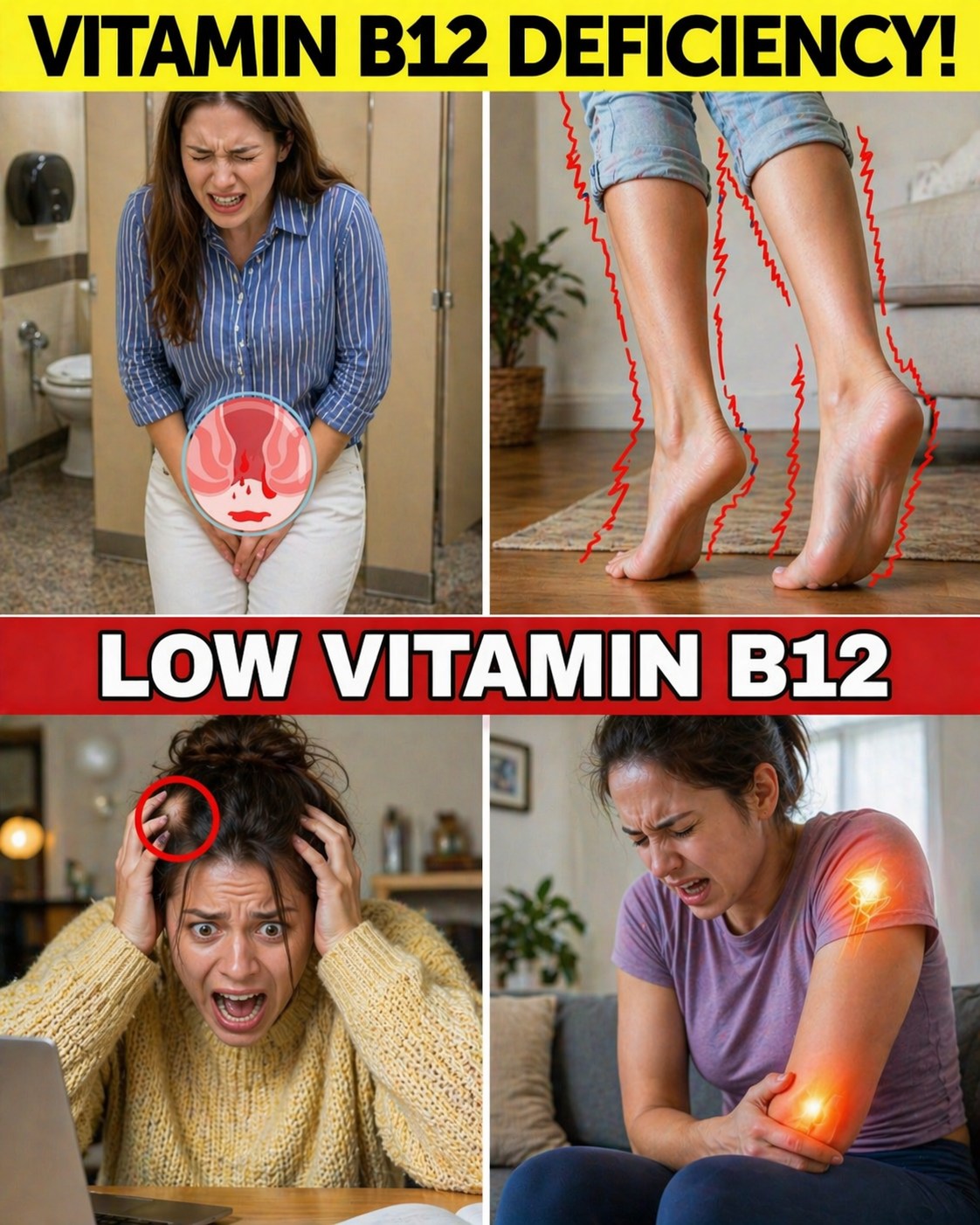
- Fatigue and weakness: Constantly feeling tired despite rest.
- Nerve pain or tingling: Pins and needles in your feet or hands.
- Yellow eyes or skin (Jaundice): A subtle but alarming sign.
- Difficulty concentrating or memory issues: Struggling with mental clarity.
These symptoms, though they may seem unrelated, can all point to a B12 deficiency. If you’re noticing any of them, especially when combined, it’s important to consult your healthcare provider for a blood test.
Common Causes of Vitamin B12 Deficiency

While aging increases the risk of B12 deficiency, several factors can contribute, such as:
- Dietary habits: Vegan or vegetarian diets often lack B12 since it’s found in animal products.
- Stomach conditions: Certain gastrointestinal issues, like acid reflux or Crohn’s disease, can affect B12 absorption.
- Medications: Some medications, like proton pump inhibitors or metformin, can interfere with B12 absorption.
Understanding the cause is the first step to addressing the issue effectively.
Preventing Vitamin B12 Deficiency: What You Can Do

1. Eat B12-Rich Foods
Incorporate more animal-based sources of vitamin B12, such as meat, fish, poultry, eggs, and dairy. For plant-based eaters, look for fortified foods, such as certain cereals or plant-based milks.
2. Consider Supplements
If you’re not able to meet your needs through food alone, vitamin B12 supplements are widely available in both oral and injectable forms. Speak with your healthcare provider to determine the best option for you.
3. Regular Check-ups
Getting your B12 levels checked regularly, especially as you age, can help catch any deficiencies before they become serious.
Conclusion
Vitamin B12 is essential for your overall health, and a deficiency can sneak up on you. If you’re experiencing any of the symptoms mentioned, don’t ignore them—take action today to maintain your nerve health and overall well-being.